No joke if youre a young American with a job go open up a Roth IRA and start saving money
My first day of classes, my professor doesn’t even hand us a syllabus. He begins instantly talking about retirement accounts. We were all a bunch of history-loving college kids who probably wanted to go into academia and we were the perfect audience for such a talk. He specifically told us to open a Roth IRA. We were young, low income, and probably all unmarried.
A Roth Individual Retirement Account (Roth IRA) is meant to hold post-tax income and accrue interest tax-free. It’s meant for young lower-income workers looking to invest early and its most effective when done then – Anyone who has made income from a job can open one (which includes child actors apparently). Roth IRAs have eligibility requirements. if you are single or the sole head of your household and your Modified Adjusted Gross Income (google that) is less than $120,000, you can put in the maximum of $5,500 a year (although you cannot contribute more than you earn if you make money below $5.5k). Married couples and old people have slightly different requirements and outcomes.
“… if a 20-year-old puts $5,000 a year into a Roth for 10 years and then stops contributing, … the 10 years of Roth contributions and growth – let’s say about 8% interest a year to age 65 – could total about $1,070,944 tax-free dollars [for retirement].”
I’d read more about it to see if youre eligible and if itd right for you but pretty much any high school and college student with a job will benefit from one. If you think you’ll need money later in life after retirement, you need to open one of these.
It’s also worth noting that in order to comfortably retire it’s recommended that you contribute at least 10% of your income and try to begin by age 20.
Many workplaces (even shitty retail jobs if you jump through enough hoops) will match your 401k contributions. My workplace (a factory), for example matches 100% for the first percent and 50% for the next 5%, meaning by contributing 6% of every check, my employer will contribute a total of 3.5% of what I make, but out of their own pocket. Make sure to find out about and take advantage of any such program you can find
One of the things Venom did very well that I’m really into is what I like to call Benevolent Possession.
This idea of sharing your body/head with another creature that’s on your side and actually cares about your wellbeing– and that sometimes you can just tap out and it’ll take over for you. I don’t care if it’s an alien symbiote or a demon or the ghost of a dead pharaoh or whatever, the concept tends to stay the same, as long as that other being decides that they like you and they want you to be happy and in good health.
Those times when you’re just so tired and you know there are things that you Need To Do but you know if you push yourself any harder today you’re going to fucking break down? Just hand the joystick to your buddy and let them do their thing while you disassociate for a while.
Get caught in a depression or anxiety spiral that you can’t get out of? No need to worry, you’ve got a bunkmate inside your head who is aware of the situation, and they’re louder and more persistent than the other voices in your head.
Pining for your ex? Good thing you’ve got a second opinion right there in your head telling you that it’s not a good idea and they don’t deserve you anyway.
Second-guessing what you wrote in that email to that very important person? Guess who you can ask about it.
Scared of walking alone outside for fear that something bad could happen? No need to worry, you aren’t alone, and if anyone tries to hurt you, your friend will f̶̨͉̬̜̹͙͈̍̂͒͘͞͠ͅư̴̦͕̰̞͛̈̄̾̇͢ç̧̛̦̱̫͌̆̑̆̿̚̚͜͢k̷̡̭̻̯͈͑̏̓̀̏̐͋̈̚͠i̸͈̤͍͚͔̙̹̙̮̿̊͂͒͋̇̑̾ͅn̷̼̮̳̥̱̊̉̋͒̄͗̌ͅg̷̺̞̠͎̼̙͉̬͉͌̿̽̒̓̚ ę̼͔̪̺̒͗́̈́̏ǎ̛̹̪̫̲͎̜̜̼̩̒̇̑͟t̩̮͈͕̰̎̀̽̽̀ t̴̡̼̬͚̞̂̀͊̾̒̃̊͑͜h̸͙̻͍͕͐̊́̋͢͡ę̖̟̬̟̰̫̭̖͔̾̃̄̑̍͘͠m̺̭̲͚̥̬̪̔̔̓̓̈́̅̚͡͝.
It’s just something that really appeals to me, you know?
Just posting this as a handly little PSA for my fellow Swedish trans people so y’all don’t have to deal with this asshole the way I did.
He took too much tissue out in some places and left too much in others so my chest is a bumpy mess and in some spots it caves in far further than it should.
But hey, all surgeons make mistakes sometimes. Except he would not admit that anything was anything less than perfect and insisted that I should just wait it out and “continue the journey of [my] anti depression meds” (actual quote, translated from Swedish). He did the same for all three post-surgery vists I fought by teeth and claw to even get in the first place. Basically he tried his best to make me believe it was all in my head.
It was only with the help from my doctor at ANOVA that I was able to get a second opinion from a different surgeon – and almost straight away when he saw my chest he said “yeah this bitch fucked up” (I’m paraphrasing here but that’s the gist of it).
And this isn’t even touching on all the information he (Schennings) straight up withheld from me before my surgery.
Don’t let him be your surgeon. Demand to get someone else – and if you can’t cope with shouting at people over the phone yourself, you can ask someone on your gender evaluation team to do it for you.
(For non-Swedes: If you want to get top surgery without having to pay for all of it yourself, you are just assigned a surgeon. You don’t get to pick and choose the same way you do in other places.)
Like the thing about Loki in Norse mythology is there’s like 8000 myths about Loki just being chaotically mischievous and the other gods are like lol oh that scamp, no matter how disastrous his schemes are, their reaction is still pretty much always ‘haha oh that’s just Loki.’
EXCEPT for basically….one myth. Where Loki’s instrumental in the death of Baldur and the gods are all WHOA TOO FUCKING FAR DUDE and send him to Hel to be tormented for all eternity, leading to his ultimate escape/release in Ragnarok to end all things and lead the army of the damned and his monstrous children to pretty much…eat all the gods, destroy Asgard, and burn the World Tree all to the ground so it can all start over.
Here’s the thing though. Norse mythology spanned centuries. The tales of Loki as the mischievous trickster god were told for centuries.
However, for most of that time, the myths were told as part of oral traditions passed down generation to generation, until they were finally compiled in manuscript form in the 13th century, roughly. This is when pretty much all the sagas, as Norse myth compilations were called, are considered to have been written down for the first time, and so they included thousands of stories that had been told over hundreds of years.
They were also regional, though there was a lot of overlap, given that the Vikings traveled widely and regularly across the various parts of Scandinavia. Still, different parts of Scandinavia had their own sagas. Norway had different sagas than Denmark who had different sagas than Iceland, etc. Even though all of them featured primarily the same figures, they each had their own unique stories featuring the gods. However, very rarely did they have radically different takes on those gods.
Now what’s significant about the fact that pretty much every saga we have, where these myths were all finally written down and preserved, is from the 13th century….
Is that pretty much all of Scandinavia had converted to Christianity by the early 12th century, with active worship of the Norse gods being scattered and mostly underground from that point on.
Why is this significant?
Because it means every Norse myth we have a written recording of was not written by people who still actively worshiped those gods. Nor were they intended to be read as such at the time.
They were written down by Christian scholars who wrote them AS stories. They were intended as collections of their regions’ cultural histories, but not by or for people who still actively believed in these stories or the figures they featured. They weren’t like….TRYING to be super accurate, is the thing. The scholars who wrote these sagas were writing down the stories that had been passed down for generations, but through the lens of people who saw them as stories their ancestors once believed, not ones that pertained to their own current worldview.
And they were writing these sagas for an audience of people who similarly believed as they believed.
Which means that inevitably, some things got ‘adjusted’ to fit the current world view, the zeitgeist of the scholars writing down the stories and that of the people who would read or have the stories read to them from thereon. Because again, they weren’t aiming for being 100% faithful to the tales as they’d been told to them. They were just treating them as stories. And what do you do when the story you’re writing down has elements that don’t make that much sense to you because they were born of and aimed a worldview that doesn’t match yours?
Well, if you’re the Christian scholars writing the Norse sagas, you ‘tweak’ those elements until they make a story that fits your worldview.
So remember how I said the various sagas were regional and had a lot of overlap but some stories were distinct to some regions and didn’t show up elsewhere?
Yeah, Ragnarok is one of those.
Thousands of sagas encompassing centuries of Norse mythology and oral traditions were written down all over the various regions of Scandinavia in the 13th century.
Ragnarok only showed up in one.
The most famous, granted, but still. Everything we’re told in Norse myths about the death of Baldur and Loki’s role in it, leading to his punishment and torment in Hel and his ultimate release and bringing forth the armies of Hel to slay the gods and end the world?
Comes from the Prose Edda and the later Poetic Edda, from Iceland.
Which had primarily converted to Christianity as far back as 1000.
Now, the Vikings? Were actually surprisingly not a big doom and gloom people. Pretty much every assumption of them as such comes from how synonymous we regard Ragnarok with their culture.
It is after all, the ultimate Judgment Day myth, isn’t it? Right up there with Christianity’s Book of Revelations. An apocalyptic end of the world scenario, a war between heaven and hell, where everything is destroyed so that the world can basically start fresh with a clean slate. Nothing old ‘deserves’ to survive, pretty much the only way for a world free of sin and evil to arise is from the ashes of the old, after everything has been cleansed with fire.
Now contrast this ‘myth’ with pretty much every other Norse myth that’s survived. Larger than life tales of grand adventures, noble quests, gods walking among mortals in disguise and heroes fighting giants and stealing from dragons.
Where the closest thing the Norse pantheon has to a devil figure is Loki, the god of mischief….not even evil, but MISCHIEF, because a far more accurate representation of the Vikings’ world view is that sometimes shit happens, because Loki the god of chaos likes to make a mess of things. And what do you do when that happens? If you’re the Vikings, you basically just shrug, go “well, that’s Loki” for you, and drink some more mead.
Loki isn’t vilified in a single myth until Ragnarok, because the Vikings didn’t hate him. And they certainly didn’t fear him. They LAUGHED at him. In nine out of ten myths, Loki ends up the subject of ridicule himself, as he has the tables turned on him or outsmarts himself
Until Ragnarok.
Which, granted, could very well be another Norse myth that was passed down generation to generation in Iceland, land of frequent volcanic eruptions and likely inspiration for Musplheim, the land of the fire giants.
BUT. Which could equally likely, and far more plausibly given the overall context of Norse mythology, simply be a story the scholar who wrote the Prose Edda made up to ‘finish off’ his saga of the world according to the Vikings, from beginning to end.
An ending his Christian audience of the times would understand and identify with a lot better than they would understand the concept of a devil-figure that existed to be LAUGHED at, to show how little the Vikings feared some mythical figure with the power to lie and deceive them….the complete opposite of the way Christians feared Satan.
Basically put….Ragnarok, for all that we think of it as the ultimate Norse myth….DOES NOT MAKE SENSE in the context of almost EVERY single other Norse myth AND in the context of how Norse society viewed the world and their place in it, or their gods and their relationship with them.
Same with Loki’s depiction in Ragnarok.
What both Ragnarok and Loki’s role in Ragnarok DO make sense in the context of, however, is in a bastardization of Christianity’s own doomsday tales of a Judgment Day, stylized to fit the trappings of Norse mythology and feature their gods instead of Christian figures.
With Loki recast in the role of the Devil, as he was the closest fit they could find to that.
And with Baldur, god of light (a Norse god who is at best a footnote in Norse myths other than Ragnarok, and certainly was never the major pantheon figure he’s assumed to be), recast in the role of the Christ figure. Whose death starts the ball rolling for Judgment Day and who is destined to return for it, to triumph over Loki/Satan and preside over the new, purified world once it’s reborn from the ashes of the old one.
Anyway, tl;dr, don’t believe the hype, Ragnarok’s probably not even an actual Norse myth but the invention of Christian writers who were like lol this would make for a great Book of Revelations fanfic AU, and Loki was almost certainly never regarded by actual Vikings as some evil, malicious world-destroyer who would lead armies of the dead at Armageddon whoops I mean Ragnarok.
tl;dr of the tl;dr Loki’s not actually evil and more on how Christians bastardize things.
The whole “die in battle and go to Odin’s table or die a coward and suffer forever in Hel’s lands” is equally erroneous. Snorri and his contemporaries were… blinkered by their own culture, either intentionally or unintentionally.
“This is my letter of love to all my LGBTQ fans. Continuously throughout my career, you’ve always been so vocal about what a positive impact I’ve had on you – that I’ve instilled joy, hope and love in you at times when there was none. That my music is an inspiration. That my story gives you hope.
But I have a secret to share with you. You see, it’s actually you that lifts me up. The unwavering loyalty. the lack of judgment. The unapologetic truth. Acceptance! Your stories are what inspire me, bring me joy and make me and my sons strive to be better people.
I didn’t think Ninjas were real, just spy’s and sometimes assassins but no one you’d specifically call “ninja”
Ninja is something of an affectation from later eras being backwards projected onto history. However, there were a number of groups that specialized in infiltration, sabotage, assassination, espionage and other “irregular warfare” tactics, often passed down in familial lines. The Iga clan of the Tokugawa period is a notable example.
The general distinction for the historical ninja groups as opposed to someone who just performed irregular warfare (like a guerrilla or a spy), was that the ninja in question had to be a mercenary, operating outside of the feudal hierarchy, and had to be a professional, so no slitting throats as a side-hobby.
Hey, wanna know why the modern idea of ninja is “wears black clothes”?
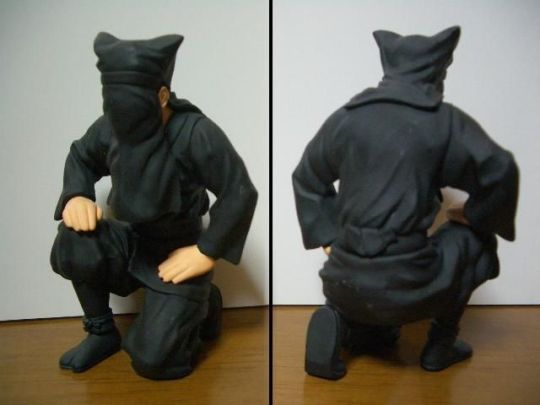
These are “Kuroko”.
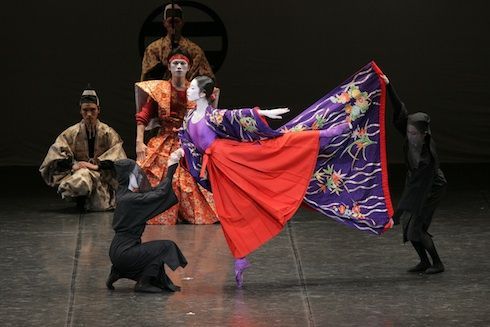
Kuroko are men and women fully dressed in black and that wear tabi on their feet. They are Kabuki theater stagehands. When they are on stage, the audience is supposed to ignore them, pretend they aren’t there, as they are “special effects”, not people per se on the stage.
Well, see, some Kabuki plays liked to play with this idea.
In certain plays, a notorious character will suddenly get stabbed by a Kuroko and die. This is shocking to the audience because Kuroko are just straight up not supposed to exist as people or characters in the play, but suddenly, one of these special effects just murdered someone. Then, they’d remove the face covering veil and reveal they were one of the characters all along.
It was a meta manner of narrative, basically. A plot twist, if you will.
That’s why the modern image of Ninja was derived from Kuroko: Unexpected Assassins, striking when no one is supposed to strike, and gone like the wind, just like that.
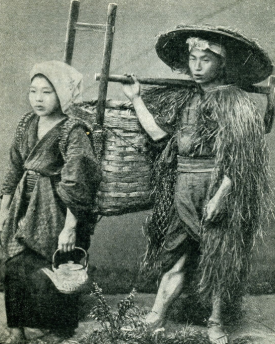
“Ninja” actually looked like this:
Just your regular run of the mill peasant.
That was the entire point.
To not be noticed. To be one with the crowd.
Espionage history !
As both a ninja AND a theater kid- this pleases me
I love the picture from the stage up there – your eyes do sort of just slide right over the Kuroko helping the actress stand and show off.





 Anxiety-prone-human